How Kenya’s Gig Economy Workers Are Turning to Forex as a Side Income
Boda boda riders, freelance designers, and food delivery couriers have more in common than simply the uncertainty of irregular earnings. They start to have a second screen open in the background, following currency pairs in the breaks between jobs. The gig economy has found itself as one of the more surprising entry points into retail trading in the continent due to a mix of smartphone penetration, mobile money infrastructure, and a generation of workers seeking to insulate themselves against income volatility.
The appeal is not hard to understand. In Kenya, gig work is paid in sporadic bursts and the intervals between the bursts may be extensive. A graphic designer awaiting payment from a client or a transcriptionist waiting to get another contract both have the motive but most importantly the time to seek alternative sources of income. Forex provided an option that was not available to any large extent by formal investment instruments in Kenya: starting with very small capital bases and trading at hours that could be fitted around unpredictable work schedules. The mix attracted a group of people previously not pursued by the financial sector.
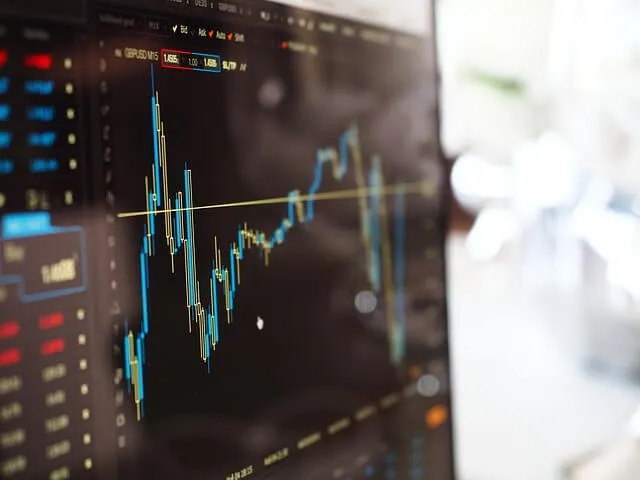
Image Source: Pixabay
The brokers saw the chance. A number of global platforms started targeting large shares of the marketing budget to Kenyan city centers in 2021 and 2022, producing YouTube tutorials in Swahili and Sheng and collaborating with local influencers who mastered the language of the hustle culture perfectly. The message was the same, trading was not the domain of the rich or the employed. Community Telegram chats with hundreds of people exchanging access points grew rapidly, with traders sharing setups on currency pairs and comparing notes on which brokers paid back to M-Pesa consistently.
The latter point is more than it seems. In a marketplace where confidence in banking institutions has a complex past, the convenience of transferring money straight to a cell phone wallet eliminates a barrier of inconvenience that would otherwise drive away a large number of potential traders altogether. The integration of M-Pesa successfully opened up forex to workers who never had a traditional brokerage account and probably would not have had one had the traditional onboarding conditions prevailed. To a boda boda rider in Westlands who needed to make daily cash flow transactions using a phone, the frictionless linking of trading accounts to mobile wallets altered the arithmetic completely.
All the stories of this space are not that simple. The openness that had removed barriers to entry was also fertile ground for unregulated schemes operating alongside legitimate brokerages. The Capital Markets Authority of Kenya has been steadily expanding its supervision on online trading platforms, yet enforcement in fast-moving digital environments remains in its early stages. Those traders who discovered it the painful way are more than happy to talk about it in community venues, thus forming an informal due diligence peer layer that overlays whatever regulatory frameworks there are.
What has evolved naturally is a trading subculture that has its own rhythms, references, and vocabulary. The language of these communities is a mix of market language with local economic news and Central Bank of Kenya announcements as much as the price of unga or the most recent fare regulation governing boda boda operators. Two worlds, gig work and retail trading, have started to make each other informed in ways that no platform or regulator intended.
The future of this generation of part-time traders turning into long term players will be determined by results which are, in real terms, unknown. Markets are merciless teachers and the rate of attrition among new retail traders in the world is not a subject of boast in broker marketing. What appears obvious is that gig workers in Kenya have already transformed the image of the people who transact forex business on the continent and that change has its implications to financial inclusion discourses that policymakers are only now beginning to consider seriously.

Comments