How to Build Confidence Before Your First Live Trade
The first live trade feels different from anything completed on a demonstration account. The chart may be identical, but every price movement now changes real account equity. That shift can make a familiar setup suddenly appear less certain.
In forex, confidence should not mean believing that the next position will succeed. It should mean knowing how much can be lost, why the trade qualifies, and what action follows if price moves in either direction.
A trader who needs certainty before entering will either hesitate indefinitely or manufacture certainty from weak evidence.
Prove That the Setup Can Be Repeated
A strategy becomes easier to trust when its conditions are specific enough to identify again. “Buy when price looks strong” leaves too much room for interpretation. A setup based on a break above resistance, a closing confirmation, and a defined stop has clearer boundaries.
Historical testing can show how the setup behaved across trends, consolidations, and volatile sessions. Forward testing on a demonstration account then reveals whether it can be executed without the benefit of hindsight.
The purpose is not to produce an impressive win rate. It is to understand the normal experience of the strategy. How many losses tend to occur in succession? Do winners develop quickly, or do they begin with a pullback? Which market conditions produce the weakest results?
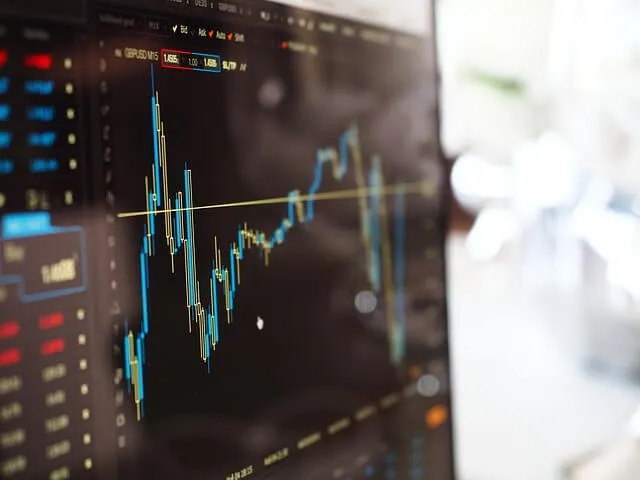
Image Source: Pixabay
Confidence grows from familiarity with the uncomfortable outcomes too.
Rehearse the Entire Order Process
Knowing where to enter is only one part of live execution. Traders should also be familiar with position sizing, order types, stop placement, partial closes, and the process for exiting immediately if the wrong volume is submitted.
A first trade is a poor time to discover how the platform handles pending orders.
Before using real funds, it helps to rehearse the complete sequence under normal and fast conditions. Open a position, attach the stop and target, modify both, close part of the volume, and check the account history. Confirm how spreads, commissions, and financing charges appear.
The exercise may feel administrative, but operational uncertainty becomes emotional pressure once money is involved. A trader who cannot find the close button quickly will struggle to evaluate price calmly.
Expect Breakouts to Behave Imperfectly
Consider EUR/USD consolidating before a US inflation report. The data comes in below expectations, the pair jumps above resistance, and the first short-term candle closes near its high. The movement looks like a convincing breakout.
Price then returns to the former resistance level as early buyers take profit and liquidity normalizes. A beginner may interpret the pullback as proof that the entry was wrong. Another may widen the stop because closing the first live position at a loss feels unacceptable.
Yet a retest after a breakout is ordinary market behavior. The question is whether the original level holds, not whether price moves immediately into profit.
This is why a realistic stop matters. It should sit where the setup becomes invalid, while the position size converts that distance into an acceptable monetary loss. If the cash amount feels intolerable, the position is too large even when the technical logic is sound.
Start Smaller Than Feels Necessary
The common assumption is that meaningful confidence comes from meaningful profit. In practice, the first live positions are more useful as tests of behavior than as attempts to generate income.
Counterintuitively, an extremely small trade can provide better preparation than a larger winner. It exposes the trader to real spreads, real hesitation, and real account fluctuations without making the outcome financially dominant.
Experienced participants often increase size only after execution becomes consistent. Beginners are more likely to begin near the maximum risk they eventually hope to use, then discover that their decisions change once the position moves against them.
For an initial forex position, the useful questions are straightforward: Was the entry planned? Was the stop left in place? Did the trader avoid adding impulsively? Was the exit handled as intended?
Before the first live session, write down one eligible setup, the exact entry condition, the invalidation level, and the maximum cash loss. Use the smallest available position, take only that setup, and save screenshots before entry and after exit. Review the execution before considering a second trade.

Comments